I have just written this book, you can get it at https://payhip.com/veganbodybuilding
It
is a book/video combo. It covers what we know about self myofascial
release (SMR), runs you through a routine with photos, text explanations
and a video, so things should be crystal clear. If you had any
questions about how to start or why you should be considering it, this
will answer it for you.
Those that have followed this blog for
some time know I spent 2 years studying massage. I don't believe that
SMR is comparable to a massage, but it is better than not doing anything
and in some situations may be the preferred modality.
It is
by donation, so although I would like you to pay a little towards the
costs if you can afford it, those of you are on a very low income can
just grab it for free.
Showing posts with label exercise. Show all posts
Monday, 8 February 2016
Wednesday, 6 January 2016
When can I stop?
By Pete Ryan
An older engine can run just as nicely with the right attention
At the time of writing I am a few weeks away from being a 50
year old. So, the question is when is a
good time for me to start winding down from all this hard training and start to
kick back, maybe add in a bit more ‘luxury foods’ and add a little ‘cushioning’
to my frame.
I look at this a different way to many people. I actually believe that people as they age
need MORE exercise. The body naturally
starts to lose strength and flexibility as we age. That does happen, but need
it happen at the same rate for everybody?
If I workout and train flexibility daily would a carbon copy of me age
more rapidly than me, if they just sat on the couch and ate junk all day? I
think they would, not only that but research actually backs this up[i].
So, if exercise is good, what changes as we age?
Warm-ups and exercise change
washed up meat(less)-head?
Warm-ups need to become more extensive. You need a longer, more comprehensive
warm-up. My system is foam rolling, then dynamic warm-up - I include every type
of movement I can think of: squats, reaching over head, a hip hinge, bending
over, lean laterally, go from floor to standing in some form. If you want to keep a range of motion do the
range of motion, at least some of the time.
Secondly, I moved away from just weights. A lot of us are pure gym bunnies, we waddle
from the squat rack to the bench and back.
I think as you get older bodyweight movements become more
important. Things like basic push-ups, but also more advanced things like handstand push-ups, dragon flags, standing roll-outs....things
that are hard to achieve and maintain, but get your body used to moving through
space in different ways. You should
still include the old faithful like pull-ups, squats and deadlifts, those will
never be misplaced in any programme, but more things that work your body
through space might just help maintain your abilities as you reach mid-life and
beyond?
Foods
Less of this?
Foods become more important as we age. We do not just slow down metabolically we
also lose the ability to assimilate as well as when we were younger. So not only do our calories need drop but we also need ‘higher quality’ calories. So, we need to actually knuckle-down on
our eating as we age, include more nutrient dense foods, and focus on our eating
with extra vigilance. That does not mean never eating 'fun food', but it does mean thinking a little more
about the diet than you did as a younger person.
Recovery
Less chance of needing a bump start?
Recovery will take more time. Let that sink in for a while, you will not
recover as quickly as a younger person.
Your hormones are not quite as optimal, your assimilation is not quite
as good, your cardiovascular system not quite as robust. All this adds up to a slower recovery, just
accept that you will not recover as well and your body will not forgive ‘gym
stupidity’ like it did when you were a younger person.
Tying things up
All in all I expect to spend as long, or even longer in the
‘training environment’ as I age. I may
not go quite as heavy, I may take more time warming up and doing mobility
stuff, I will have to be more on point with my diet, but you’ll still see more
there. I take heart from the strict
vegetarian Joe Rollino (The Great Rollino)[ii].
Who was still training many days a week and died at 104 by being hit by a van
(doing his morning cardio training). The
man was still training and doing feats of strength, in fantastic physical shape
with no hint of slowing down...even all that training could not protect him from
a reckless driver, but we shall never know how long he would have continued had
he avoided that accident. So, see you in 50 years time, I’ll be by the squat
rack...warming up :-)
[i] [i]
https://www.nia.nih.gov/health/publication/exercise-physical-activity/introduction
[ii] https://en.wikipedia.org/wiki/Joe_Rollino
Product of the week
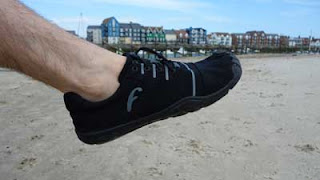
Freet - vegan range of minimal, exercise and hiking shoes get 55% off RRP using the code PeteR
Labels:
ageing,
diet,
exercise,
fatloss,
fitness,
health,
muscle gain,
New Year,
resolution
Saturday, 24 October 2015
Recovery isn’t upright
The chances are that if you were at school and doing sport;
after the race when you are bent over & your breathe was heaving, do you
remember the coach telling you to stand up straight and even to put your hands over
your head. These ideas were created to
allow the diaphragm to be in the best position to allow quickest recovery.
Now suppose I told you that this is wrong. Not only is it wrong but doing a HIIT cardio
protocol you can lower the heart beat by over 20 beats per minute (BPM) MORE
simply by putting your hands on your knees and bending forward slightly. Would that be worth your time learning?
The study
This is the findings in a post-graduate thesis where they
measured the recovery rates between standing upright, with hands over head
& holding yourself in that well known bent over recovery position with your
hands on your knees.
First let us address the issues stated by your old
coach. “Standing upright with hands over head opens the diaphragm to the
maximum.” Says your coach. “You aren’t compressing your lungs that way.”. That is the common reasoning, but it appears
that this actually incorrect. You are
not compressing your lungs by bending over as you are hip hinging in this
position. Bending forwards like this
could actually increase your lung capacity slightly. Also by using the arms as support for the
upper body you lower the activity of the sympathetic nervous system (fight or
flight) & heighten the influence of the parasympathetic nervous system
(rest & digest), this also aids recovery.
In this study they saw over 20BPM improvement in 3
minutes. After 3 minutes you either had drop
of 31BPM standing upright with hands overhead or 53BPM by hip hinging forward
with hands on your knees. That
difference is a very significant difference if you are doing intervals or
recovering between bouts of exertion.
So, to sum things up.
If you need to maximise recovery between sets or during a contest use the
bent over, hands on knee posture & be ready to go
again as soon as possible.
You can read the full thesis at http://cedar.wwu.edu/cgi/viewcontent.cgi?article=1329&context=wwuet
Even if you are not concerned about the speed of recovery; consider
that the faster your heart rate returns to normal, the faster can begin to
repair & the super-compensation the body needs to improve. So, whatever your
goals learning these methods to maximise recovery will benefit you and optimise the results of any training you do.
Special thanks to Dave of Vegan Runners for the pictures of him after a race and Jemma for taking the pictures. If you are interested in getting involved in Vegan Runners email and I can pass you on the details.
Wednesday, 30 September 2015
Exercise with illness
I am not talking about mental illness, or other chronic
physical issues. We can cover those in
later posts if you like, but in this case I am referring to colds, headaches
& other issues. It is usually
obvious if you have a major illness that you cannot workout. That is not the
issue I am addressing here, the main problem is borderline illness.
Should you lift weights with a cold?
Should you run that 10Km run with a cough?
Unfortunately, there are no hard and fast rules to illness,
but there are a few guidelines. Never
train if you have a fever or are feeling dizzy. The body heats up when you
exercise, if you already have a fever, then the added temperature rise could cause
serious issues. If you are dizzy then the chances of injury are not worth the
risk as you could fall, lose balance or drop a weight, fatigue will increase
the chances of that happening. Light
cardio can actually help at the start of a cold, opening the airways &
improving mucus flow (which sounds awful, but is actually a good thing). Notice I said ‘light’ aerobic activity, a
flat out 10Km run will depress the immune system & possibly cause more
serious symptoms to develop, so the best plan is a light session. That can be bodyweight resistance work, or
light cardio work, no maximum output sessions.
Why did you get ill?
This can be for a number of reasons. If you are under-conditioned your body is
less able to fight off diseases.
Conversely, if you are over-conditioned your immune system can be depressed
& so you can become ill more easily.
Times of high stress, dieting or hard workouts can also lead to an
increased chance of illness. Optimal
health is achieved by modifying your training & lifestyle to what is
happening in your life. If stress is
high, then backing off the training & focusing upon recovery may be the
best option. At times when stress is low pushing the training for a while might help build your body to its next
level of development.
Also every immune
system has a ‘blueprint’ of diseases. If you have been exposed to the disease
(or immunity was passed on by your mother), then you will fight off the disease
very quickly, if however your body has to design a new defence from scratch to
repel the invader, then you will often suffer more as the body battles an
unknown attacker.
How long should you wait
There are no rules, but generally you can use this guide:
- 3 days for a sniffle
- 7 days for a full cold
- 2 weeks for flu
These are ballpark figures as your recovery depends on the
bacteria or virus you catch, your bodies reaction to the disease, the health of
your body when you get the disease, so if you are not recovered within those
timeframes, take as long as you need (plus a few days of recuperation after the
symptoms disappear).
If you get ill
If illness strikes the first thing to do is to honestly
assess how bad the illness is. After
that, you need to consider outside factors like stress, work schedule etc. If you decide to workout then go easier than
you think, pick light bodyweight movements, easy cardio or similar. Be extra careful with post-workout recovery
& take in extra fluid. Also be
willing to modify workouts or even cancel them if symptoms increase.
The final decision
Everyone will get ill at some point. All of us have to
choose whether to push through or rest when we come down with a disease. Your ability to know your body & know
which course to take can mean the difference between a few days off & being
bedridden for a longer time. Always tend
towards rest if you have any doubts as rest rarely causes issues, but
over-working can be achieved easily during times of illness. Listen to your body & react honestly to
what it is saying to you. You have
plenty of time to be a Kryptonian, trying to do that during illness will only
set you back further.
Hopefully illness won’t visit you very often, but when it
does be sure you treat it with respect & think about your actions carefully.
Subscribe to:
Posts (Atom)