To visit the Gorilla Gym website click here


Showing posts with label muscle gain. Show all posts

Wednesday, 6 January 2016

When can I stop?

By Pete Ryan

An older engine can run just as nicely with the right attention

At the time of writing I am a few weeks away from being a 50 year old.  So, the question is when is a good time for me to start winding down from all this hard training and start to kick back, maybe add in a bit more ‘luxury foods’ and add a little ‘cushioning’ to my frame.
I look at this a different way to many people.  I actually believe that people as they age need MORE exercise.  The body naturally starts to lose strength and flexibility as we age. That does happen, but need it happen at the same rate for everybody?  If I workout and train flexibility daily would a carbon copy of me age more rapidly than me, if they just sat on the couch and ate junk all day? I think they would, not only that but research actually backs this up[i]. So, if exercise is good, what changes as we age?

Warm-ups and exercise change

washed up meat(less)-head?

Warm-ups need to become more extensive.  You need a longer, more comprehensive warm-up. My system is foam rolling, then dynamic warm-up - I include every type of movement I can think of: squats, reaching over head, a hip hinge, bending over, lean laterally, go from floor to standing in some form.  If you want to keep a range of motion do the range of motion, at least some of the time.  Secondly, I moved away from just weights.  A lot of us are pure gym bunnies, we waddle from the squat rack to the bench and back.  I think as you get older bodyweight movements become more important.  Things like basic push-ups, but also more advanced things like handstand push-ups, dragon flags, standing roll-outs....things that are hard to achieve and maintain, but get your body used to moving through space in different ways.  You should still include the old faithful like pull-ups, squats and deadlifts, those will never be misplaced in any programme, but more things that work your body through space might just help maintain your abilities as you reach mid-life and beyond?

Foods

Less of this?

Foods become more important as we age.  We do not just slow down metabolically we also lose the ability to assimilate as well as when we were younger.  So not only do our calories need drop but we also need ‘higher quality’ calories. So, we need to actually knuckle-down on our eating as we age, include more nutrient dense foods, and focus on our eating with extra vigilance.  That does not mean never eating 'fun food', but it does mean thinking a little more about the diet than you did as a younger person.

Recovery

Less chance of needing a bump start?

Recovery will take more time.  Let that sink in for a while, you will not recover as quickly as a younger person.  Your hormones are not quite as optimal, your assimilation is not quite as good, your cardiovascular system not quite as robust.  All this adds up to a slower recovery, just accept that you will not recover as well and your body will not forgive ‘gym stupidity’ like it did when you were a younger person.

Tying things up


All in all I expect to spend as long, or even longer in the ‘training environment’ as I age.  I may not go quite as heavy, I may take more time warming up and doing mobility stuff, I will have to be more on point with my diet, but you’ll still see more there.  I take heart from the strict vegetarian Joe Rollino (The Great Rollino)[ii]. Who was still training many days a week and died at 104 by being hit by a van (doing his morning cardio training).  The man was still training and doing feats of strength, in fantastic physical shape with no hint of slowing down...even all that training could not protect him from a reckless driver, but we shall never know how long he would have continued had he avoided that accident. So, see you in 50 years time, I’ll be by the squat rack...warming up :-)


[i] [i] https://www.nia.nih.gov/health/publication/exercise-physical-activity/introduction
[ii] https://en.wikipedia.org/wiki/Joe_Rollino


http://www.gorillagym.co.uk/ 

http://www.veganbodybuilding.org/

Product of the week

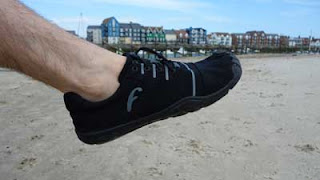
http://freetfootwear.co.uk/
Freet - vegan range of minimal, exercise and hiking shoes get 55% off RRP using the code PeteR

Sunday, 8 November 2015

IIFYM – House of straw?


IIFYM (If It Fits Your Macros) has become popular within the training world over the last few years. Although this type of eating has always existed within the fitness community, it was never formalised or given a specific name, but there have been many bodybuilders and athletes over the years that have eaten anything and only moderated amounts eaten, not food choices.
The diet has recently been popularised by a guy who is funded by the meat and dairy industry and also believes the latest World Health Organisation study linking cancer to processed meat (& probably red meat) is wrong (he also shows his complete misunderstanding of what that study actually says and what it is not saying...but that is another story I may write later as many people seem confused by the research).

What are ‘macros’?

Macros is short for the word ‘macronutrients ‘.  Macros are the amount if protein, carbohydrates and fats in food.  It does not take into account, vitamins, minerals, fibre, antioxidants or other nutrients in foods.

Let’s look at a few ways to put a diet together

For clarity let’s look at a few examples to make a point.  Suppose I wanted 30% protein, 30% fat and 40% carbs (don’t worry about those numbers, exchange them for your preferred ratios if you like).  Now I will offer a few scenarios and see which makes sense:

  •             Scenario 1: Get protein powder, glucose powder and some fat.  I measure out the correct amounts of each of these macronutrients and have these throughout the day. My macros are spot of man!
  •          Scenario 2: Eat completely processed foods.  I can eat whatever I like, but all the grains must be highly refined, all the food is highly processed (what we’d call ‘junk’ food).  However, I fit the macros so they fit my goals. Again, I end up fairly close to my goal (there may be a little variation as real foods means a little tweaking to fit exact goals...).
  •         Scenario 3: Eat only what are generally accepted as healthy food.  You never deviate from this.  Weigh all food exactly and every meal is carefully measured.  You get close to your goal, you are hardcore!
  •          Scenario 4: You eat mainly whole foods.  You aim at around 80% of your diet being what is considered healthy food, the other 20% you can go a little wild, have something you want that may not be ideal. You get close to your ideal intake, but there will be some small variations day to day.


Which of the above will be the best scenario for most people? Let’s look through the results of the scenarios above.

  •       Scenario 1: This will get you closest to your planned macros intake.  Unfortunately, you will be losing out on fibre and many phytonutrients found only in whole plants. You may well lose fat, you could even look good eating like this over the short term.  Eventually though, nutrient deficiency and lack of fibre will lead to ill health, if  this is continued an early death will almost certainly follow. So, we know immediately that simply fitting a diet to your ‘macro needs’ are not enough to get all the nutrients you need to achieve a healthy condition, even if you can lose fat on this diet.
  •      Scenario 2 : Processed food can make you lose weight.  Take a look at the Twinkie diet[i].  In this diet a professor lost 27lbs eating twinkies and other junk foods, but kept the calories lower than he needed to maintain his weight, so you can lose weight by simply cutting calories.  A lot of fad diets use the cutting out of certain foods or classes of macronutrients to make you eat less calories, so you lose weight, but in reality it is not usually the food or macronutrient itself that is the cause of the weight loss, but the lowering of calories.  So, if you cut carbohydrates or fat from your diet you lose weight, not because you cut that macronutrient out, but because you lowered your daily calorie intake. The issue with eating only processed food is again the lack of fibre and the lack of vitamins, minerals and other phytonutrients in the foods you are eating.  You could lose fat, but you are setting yourself up for disease as you get older eating only processed food.
  •      Scenario 3: In this scenario you are only ever eating what we call ‘healthy food’ (I will leave you to define healthy food).  This sort of eating should allow the body to get all the nutrients it needs.  There would be enough fibre, phytonutrients, vitamins and minerals.  You will lose fat. In fact if you are dieting for a bodybuilding contest or to compete in a specific weight class you may need to do this sort of diet for a specified amount of time. However, if you follow this diet for prolonged periods of time several issues could develop. Foremost could be the development of the eating disorder like Orthorexia, this is not a recognised condition yet, but many of us in the fitness world have experience with this condition[ii].  Becoming obsessed all the time about only eating exact foods, in exact amounts, can lead to all sorts of problems and many people are left with the options of becoming super-obsessive about food or feeling failure as they fail to be 100% ‘clean’ with their diet.  This can cause mental stress and leads to issues like binge eating or other eating disorders.
  •      Scenario 4: Is my preferred choice.  You generally eat healthy whole foods, but you allow yourself some leeway.  You are not super strict on exact calorie intake or food choices.  You can have potato if you can’t find rice.  After you have that salad you can allow yourself that small dessert. Allowing yourself the option to eat mainly healthy, but also giving yourself some permission to stray in moderation allows for cravings to be satisfied while also reaching very close to your ideal intake of calories.  Some days you may feel like being a little stricter, sometimes a little more slack, but generally hovering around the 80:20 with 80% being whole foods and 20% being other foods of your choice seems to be a happy medium where you can achieve your goals with very little stress.

Consider your situation and the options


I believe that ideally you do need a little control over what you eat.  The obesity epidemic in society suggests that some control is needed[iii]. However, just picking on one aspect (in this case your macro intake) and suggesting that this, and ONLY this, is the important factor suggests that a person is somewhat naive about the longer term effects of food on health and well being.  What is needed is balance.  You need to include control into your diet, but you must also allow some leeway to explore new foods and enjoy some variety in your diet.  If you aim at eating mainly whole foods, then allow yourself the option of a few foods that may not be especially healthy I believe you will achieve a better result than just focussing upon the exact intake of protein, carbohydrates and fats.
With IIFYM I consider it like this.  If I was to build my dream home, I employ the best construction workers and the best designers to create the perfect building for me.  Then I pull out a pile of straw and say “OK, build me that building using this”.  Just like the fairy story, no matter how well my designers design & my construction workers construct, the building will still fall down as soon as the big, bad wolf starts blowing it down!  Similarly, if you have a great, training programme, fantastic recovery & plan the ideal calorie and macro intake.  All this will mean nothing if you do not have all the other food factors in place, like phytonutrients, antioxidants, fibre and other factors that can only be found in whole foods. You will have built your own body from ‘straw’ and when it is stressed by hard training, disease, stress or aging it will fail you. Consider your food not just as fuel, consider your food as health.  One of the major factors in your long term health are the food choices you make, so consider including generous amounts of whole foods into your diet for the best results.
If you want more about how to plan your diet or more indepth looks into dietary ideas or planning, then let me know by posting below and I will start researching your question.


[i]  http://edition.cnn.com/2010/HEALTH/11/08/twinkie.diet.professor/
[ii] https://www.nationaleatingdisorders.org/orthorexia-nervosa
[iii] James PT, et al. The obesity epidemic, metabolic syndrome and future prevention strategies. European Journal of Preventive Cardiology February 2004 vol. 11 no. 1 3-8. http://cpr.sagepub.com/content/11/1/3.short